In This Article
The skills that made you successful as a solo product manager can actually hurt you when leading hundreds of people.
The Gritty Reality of Starting from Zero
My first couple of roles as a PM threw me into the deep end. On several occasions, I was the first product manager hired at a startup team, which meant I faced a double challenge: figuring out what a product manager should actually do while simultaneously earning my right to sit at the table and tell these people what we should build. It was a gritty way to build a career, but it worked.
There were no established processes, no mentoring programs, no best practices handed down from previous PMs. Every framework I implemented, every process I created, every stakeholder relationship I built happened through trial and error. I made mistakes that would make me cringe today, but I also developed an intuitive understanding of how products get built from the ground up.
This experience taught me something crucial that I'd later apply to scaling teams: growth isn't just about adding people. It's about evolving your entire approach to match the complexity of your situation.
The Four Stages of Product Team Scaling
That scrappy, figure-it-out-yourself approach got me through those early roles. But as I moved into larger teams, I realized I needed a framework for understanding how the job changes at each level of scale. At each stage of a PM's career, there's a different set of challenges. You can't keep using the same playbook as you grow.
Stage 1: Solo PM (1 person)
You are the entire product organization. Every decision, every stakeholder meeting, every research session flows through you. Success comes from core PM competencies and building credibility with engineering, design, and business stakeholders.
Stage 2: Small Team (2-8 people)
Your first real delegation opportunities and first leadership growing pains. You can no longer do everything yourself, but the team is still small enough to maintain direct relationships with everyone.
Stage 3: Multi-Team (9-25 people)
A fundamental shift. You're managing managers, coordinating across multiple product areas, and dealing with exponential growth in communication overhead. Informal communication alone won't keep everyone aligned.
Stage 4: Organization (100+ people)
Leading through influence and strategic oversight. Direct control becomes impossible. This stage requires vision setting, culture building, and strategic alignment across multiple product areas, often spanning different time zones.
Real-World Application: The Inception Story
Let me share how understanding these scaling stages solved a complex organizational challenge. I was working on a team constantly running big cross-organizational initiatives that required aligning multiple roadmaps and technology decisions. These teams had been combined through acquisitions and were dealing with legacy solutions that didn't naturally fit together.
The traditional approach would have been to have an architect draw up a big re-architecture plan and hand it down to the teams. But I recognized that if the company was going to gain the synergies they expected from these acquisitions, we needed a different approach. We were operating at Stage 4 scale but trying to use Stage 1 methods.
This is when we brought in the concept of "inceptions": offsite discovery, exploration, and planning sessions that involved people from across the entire organization. Instead of top-down architecture decisions, these meetings gave everyone ownership over the entire process. We included engineers, product managers, designers, and business stakeholders from all the affected teams.
The results exceeded our expectations. We came up with better strategies because we had diverse perspectives identifying issues that weren't visible to leadership. When things didn't go as planned, we had established communication lines and relationships we could leverage. The collaborative process created buy-in and understanding that made implementation much smoother.
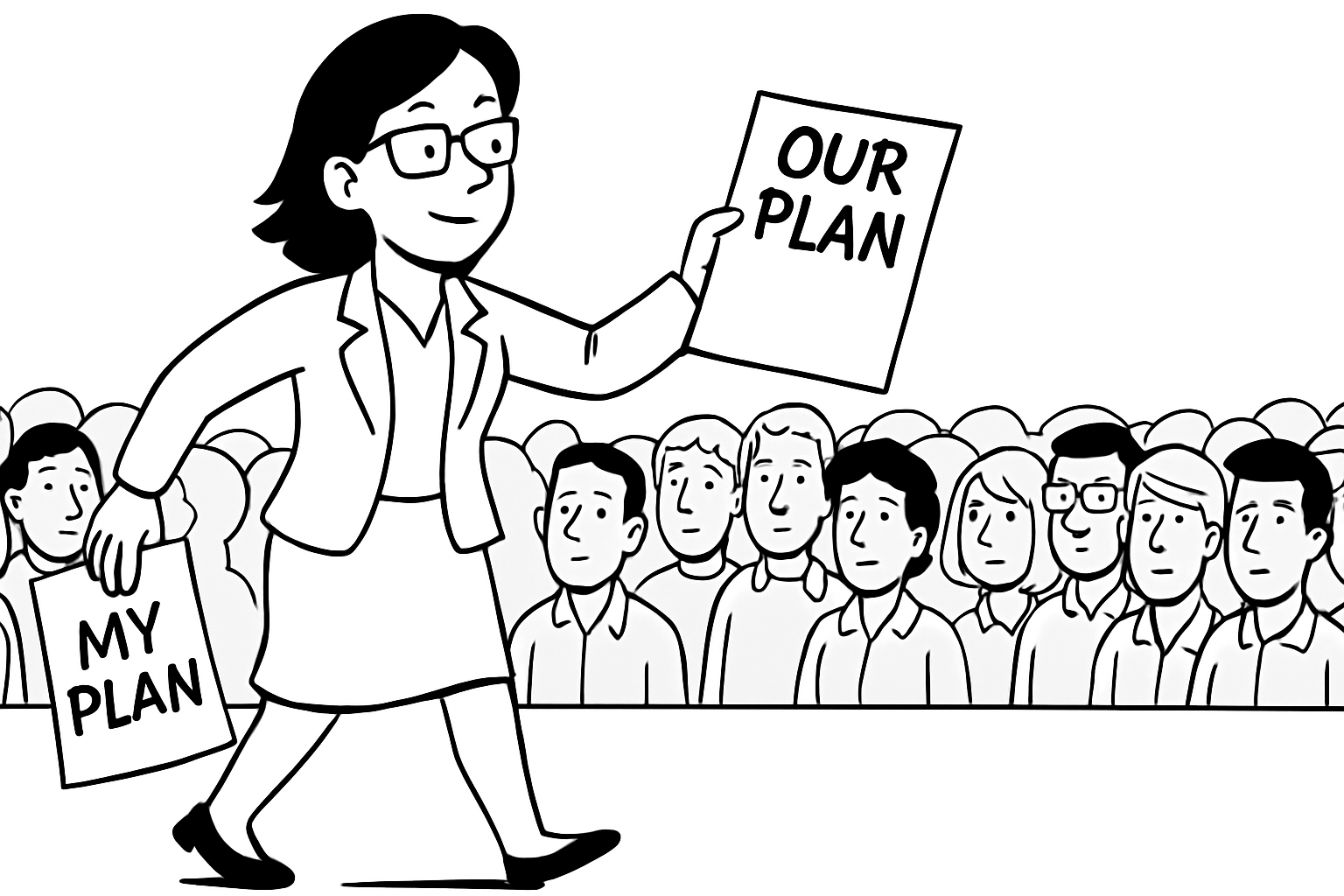
This experience reinforced a critical lesson about scaling: the processes that work at one stage can become obstacles at another. That solo PM instinct to just figure it out and make the call yourself -- the very thing that got me through those early startup roles -- would have been disastrous here. Scaling means learning to let go of what made you successful before so you can build something bigger than any one person could deliver alone.

Nathan Rohm
Product Leadership & Innovation Expert
Nathan Rohm is a product leader with 25+ years of experience transforming organizations through strategic innovation. He has scaled products from $5M to $150M, achieved 2,000% growth rates, and built teams that deliver results across startups and Fortune 500 companies.
Get in Touch